Real tree health assessments across the Charlotte metro — diagnose disease, structural risk, or decline before it’s an emergency.
Not every concerning-looking tree needs to come down. A tree with dead limbs but a healthy trunk and root structure is often a trimming problem, not a removal problem — corrective pruning can extend its safe life for years. The real question is whether the trunk and root system are structurally sound, and that’s a diagnosis, not a guess from the curb.
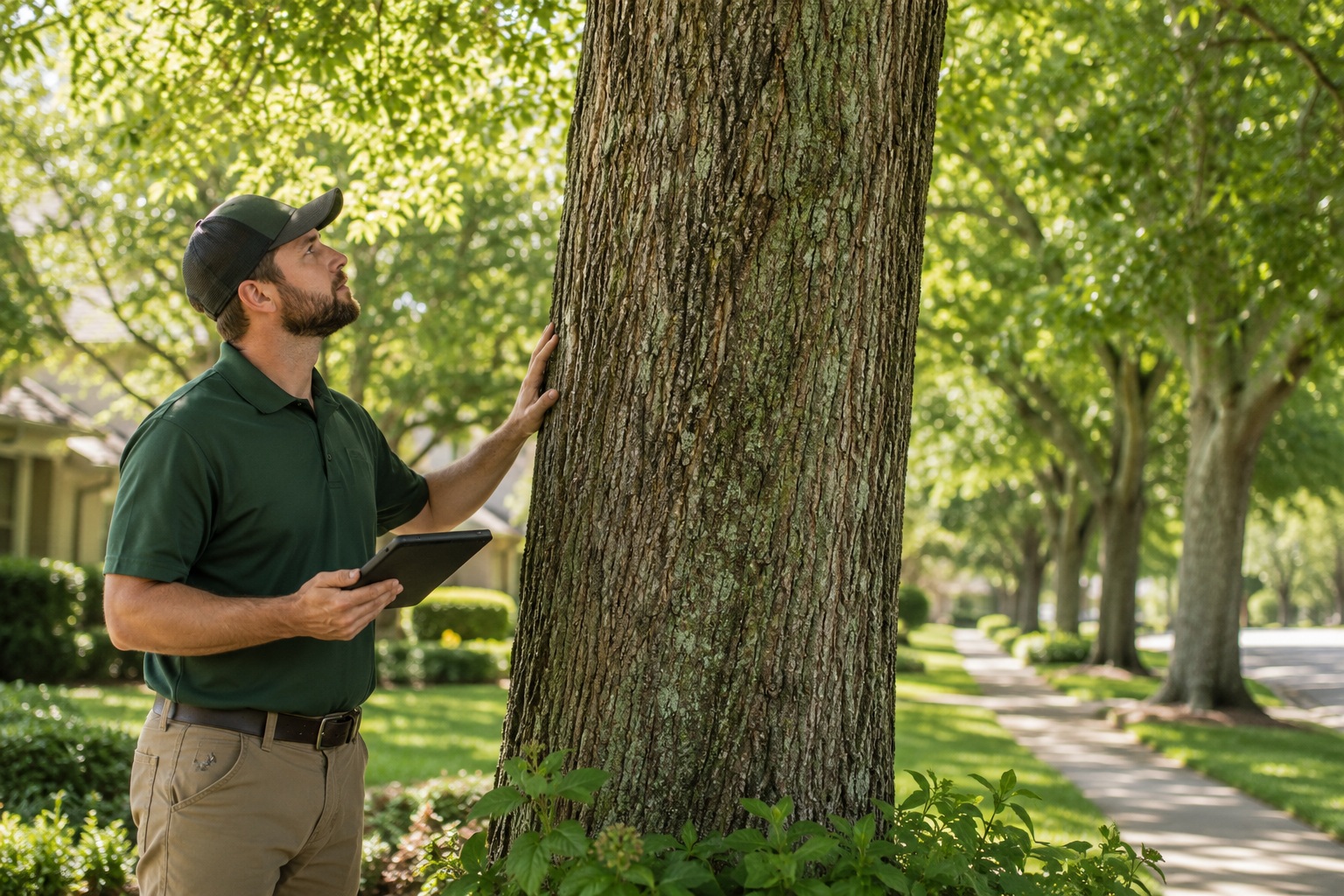
A tree health consultation looks at the specific signs that actually matter: cracked bark near the base, fungal growth at the root flare, a lean that’s worsened over time, or canopy dieback. We match you with a provider experienced in tree health diagnosis to give you a real answer — treat, trim, monitor, or remove — before you commit to the cost of any of them.
Structural risk shows up in specific, checkable signs: cracked or peeling bark near the trunk base, mushroom-like fungal growth at the root flare (a sign of root decay), a lean that’s visibly increased, or a canopy that’s thinning unevenly rather than from age or drought stress alone. A provider quoting removal without checking these specifics is guessing, not diagnosing.
Trunk, root flare, canopy, and lean checked for real risk signs.
Disease, pest, or structural issues identified where present.
A clear next step: monitor, treat, trim, or remove, with the reasoning explained.
Documentation useful for insurance, HOA requirements, or your own records.
A standalone consultation typically costs less than an emergency removal call, and can save the cost of an unnecessary removal if the tree turns out to be treatable or just needs trimming.
Every provider in our network carries real liability insurance and is checked against a real work history before we route a lead to them, including providers experienced specifically in tree health diagnosis, not just removal. We’re not incentivized to recommend removal over a cheaper trim.
Real tree health assessments across the Charlotte metro — diagnose disease, structural risk, or decline before it’s an emergency.
Request a free estimate and describe what’s concerning you about the tree.
We match you with an insured provider experienced in tree health assessment.
They assess the tree and identify the real issue, if there is one.
You get a clear recommendation — monitor, treat, trim, or remove.
A few threats show up repeatedly in the Charlotte area’s tree population. Southern pine beetle can move fast through stressed loblolly and shortleaf pines. Oak decline shows up as gradual canopy thinning in older oaks rather than a sudden event. Emerald ash borer, an invasive pest spread through much of the eastern US, has put ash trees at high risk nationally, including in North Carolina. None of these are things to diagnose from a photo — a real on-site assessment is what tells you which, if any, applies to your tree.
It depends on whether the trunk and root system are structurally sound — a real assessment checks for cracked bark, root-flare fungal growth, and lean.
Sometimes — it depends on the cause and how advanced it is. A real assessment tells you which situation you’re in.
Often yes — it can confirm removal is the right call, or catch that a cheaper trim would actually solve the problem.