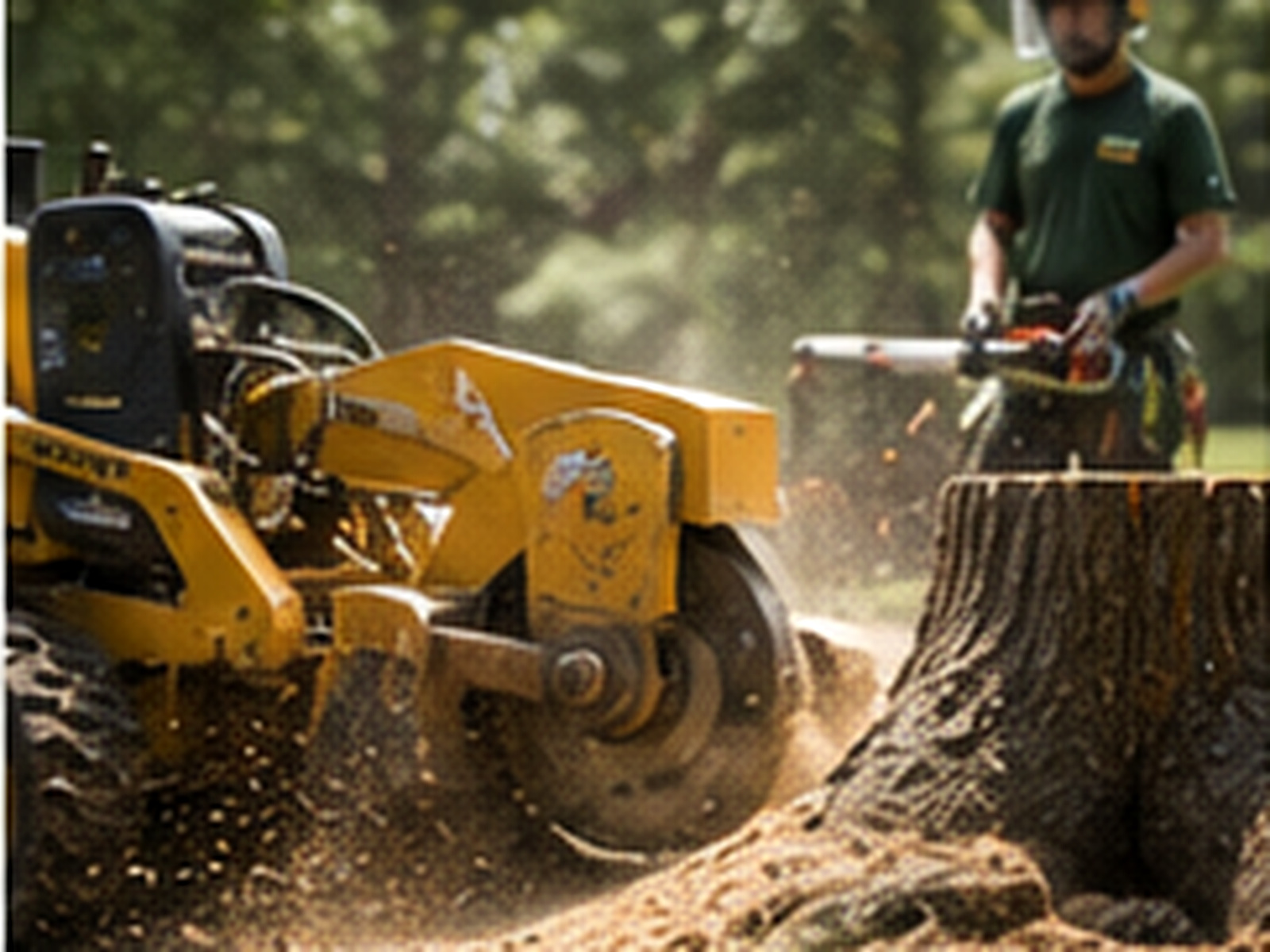
Insured stump grinding across the Charlotte metro — whether the stump is fresh or years old.
A stump left in the ground doesn’t just sit there — it can sprout new growth from the root system, attract termites and other wood-boring pests as it decays, and it’s a tripping hazard and a mowing obstacle in the meantime. Grinding removes the stump below grade so the area can be leveled, reseeded, or used for landscaping.
We grind to a depth appropriate for what you’re planning next — a few inches below grade is usually enough for reseeding, but a deeper grind is worth it if you’re planning to plant something new in the same spot. Stump size, wood density, and root spread all affect how long grinding takes and what it costs.
Stump grinding removes the visible stump and the upper root mass, leaving the deeper roots to decompose naturally over time — this is faster and far less disruptive to the surrounding yard than full stump and root excavation, which is rarely necessary unless you’re planning major construction on that exact spot.
Stump size, wood type, and root spread checked before quoting.
Mechanical grinding below grade, depth suited to your plans for the area.
Wood chips and grindings cleared or left for mulch, your choice.
Buried lines and irrigation checked before grinding starts.
Pricing depends mainly on stump diameter and wood density — larger, harder stumps (like oak) take longer to grind than smaller, softer ones. Multiple stumps on the same visit typically cost less per stump than separate visits.
Every provider in our network carries real liability insurance and is checked against a real work history before we route a lead to them. Stump grinding equipment can damage buried utility lines or irrigation systems if the area isn’t checked first — our providers know to ask before they grind, not after.
Insured stump grinding across the Charlotte metro — whether the stump is fresh or years old.
Request a free estimate and tell us about the stump — size, location, and what you’re planning for the spot.
We match you with an insured local provider.
They assess the stump and confirm grind depth and any utility concerns.
The grinding happens, with debris cleared or left as mulch per your preference.
A stump left in place for years isn’t just a mowing obstacle — as it decays, it becomes an attractive nesting site for termites and other wood-boring pests, which can spread to nearby structures if the stump is close to a home. Some species, including willow oak and crape myrtle, are also prone to sending up new sprouts from the root system.
There’s no urgency — stumps can be ground months or years after removal, though older stumps may have started sprouting new growth.
Grinding equipment is heavy and can leave some disturbance around the immediate area, but a careful provider works to minimize impact.
Yes, once grinding is deep enough and the area is leveled — tell your matched provider what you’re planning.